Industry news
Industrial Touchscreen Structure and Manufacturing Process: Working Principles of PCAP and Resistive Technologies
2026-10-22
In industrial equipment, touch panels are a crucial component of the Human-Machine Interface (HMI). They must be seamlessly integrated with LCD displays, control boards, enclosures, and operating systems to ensure reliable and coordinated operation.
Touch panels that perform exceptionally well on smartphones and tablets often fail to meet the rigorous demands of outdoor terminals in factory automation, medical devices, and transportation equipment. Varying operating environments can significantly affect touch panel sensitivity, which is why thoughtful design is essential to optimize product performance and usability.
SKY-TDM provides capacitive and resistive touch panels, LCD displays, control boards, and all-in-one display solutions for industrial equipment, perfectly tailored to meet the challenges of diverse and complex application environments.
1. Capacitive Touch Panels
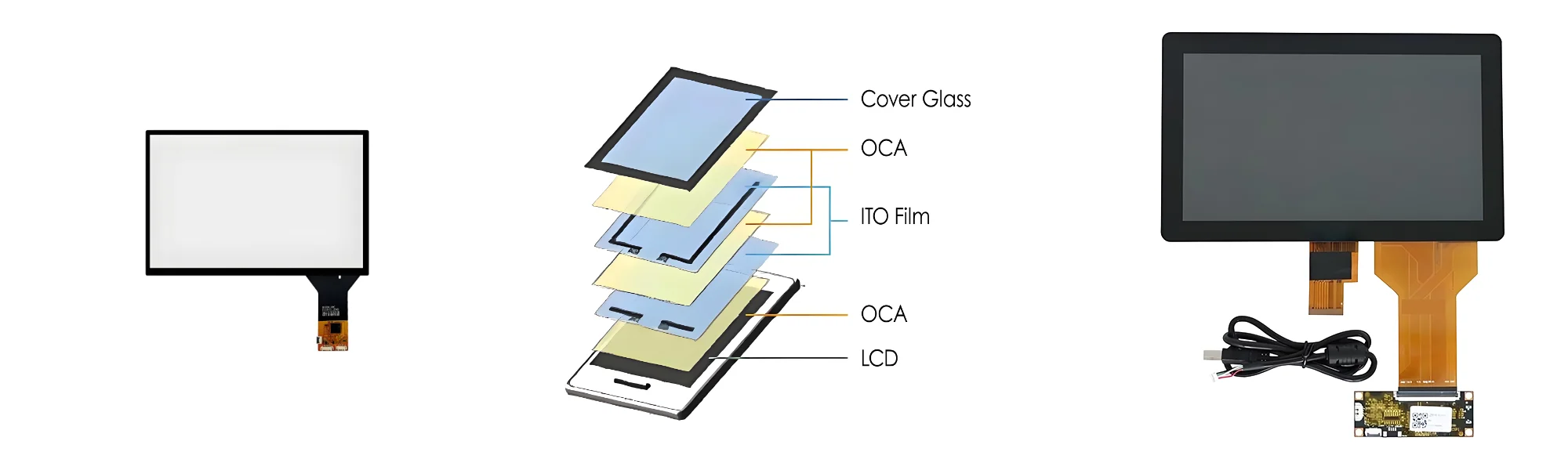
The physical appearance of a touch panel does not solely determine its performance. Even with the same touch panel, variations in cover glass, sensor structure, OCA (Optically Clear Adhesive), FPC design, and controllers can significantly impact visual quality and overall performance, such as touch accuracy, optical clarity, and anti-interference capabilities.
Common capacitive touch panel structures include G+G, P+G, and G+F+F, with each structure being suited for different device applications.
The manufacturing process typically involves cover glass processing, sensor pattern etching, FPC bonding, cleaning, lamination, assembly, and functional testing. Meeting specific equipment requirements often necessitates custom cover glass and FPC interfaces, which will ultimately affect the physical dimensions and connection interfaces.
2. Resistive Touch Panels
Why are they so widely used in the industrial sector?
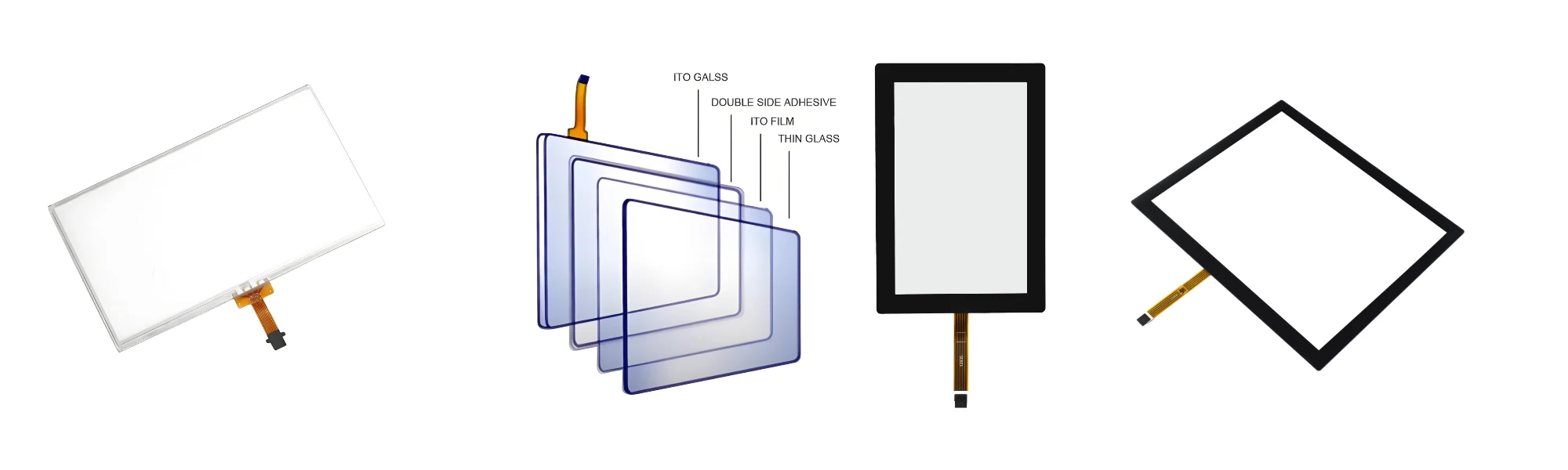
This largely comes down to their structure and activation method. A resistive touch panel consists of two conductive layers separated by insulating spacer dots. When pressure is applied, the top and bottom layers make contact, and the controller calculates the touch position by measuring the resulting electrical signals. This mechanism allows resistive touch panels to operate reliably whether activated by bare hands, gloved hands, or a stylus—a highly practical feature for industrial environments.
Currently, the most common product structures on the market are 4-wire, 5-wire, and 8-wire configurations. While their operating principles are largely similar, they differ in their anti-interference capabilities, making them suitable for different equipment operating environments.
3. How to Choose the Right Touchscreen for Different Industrial Equipment?
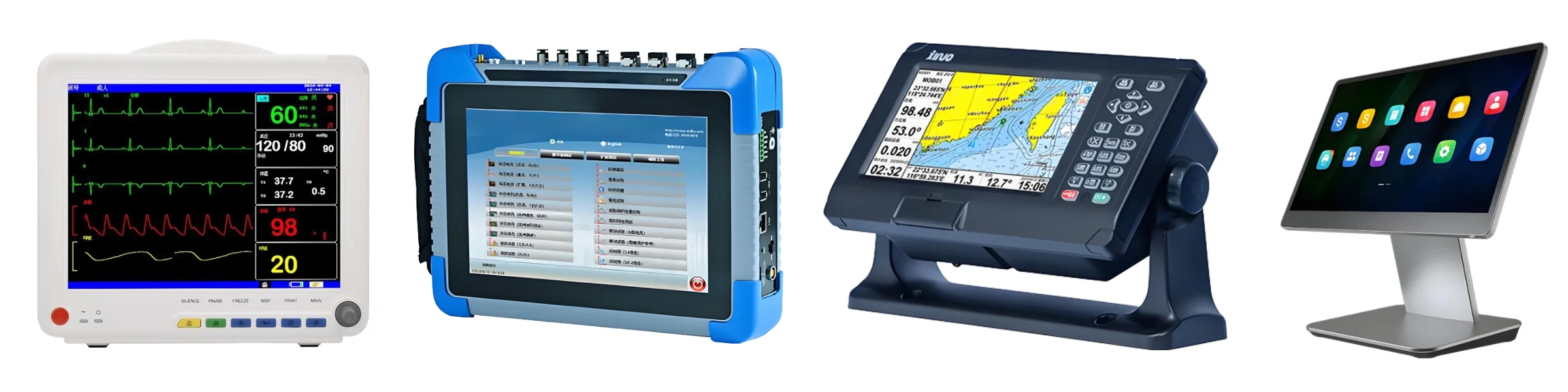
Let's briefly explore this from four perspectives: factory automation, medical devices, self-service and commercial equipment, and transportation and outdoor systems.
Factory Automation:Operators often require intuitive interaction experiences and multi-touch gestures, making PCAP capacitive technology highly advantageous for industrial control panels. However, if the application relies on pressure-based input or requires compatibility with specific gloves and pointing tools, resistive technology is the better choice.
Medical Devices:Product design must account for cleaning protocols, glove compatibility, touch accuracy, surface design, and regulatory requirements. Based on specific use cases and validated configurations, PCAP capacitive technology is now widely adopted across various medical scenarios, gradually replacing resistive technology.
Self-Service and Commercial Equipment:Devices such as printers, vending machines, charging stations, and information kiosks often require customized sizes and structures. PCAP technology is ideal for these applications as it delivers a superior interactive experience.
Transportation and Outdoor Systems:Outdoor and transportation equipment faces harsh environmental challenges, including moisture, temperature fluctuations, vibration, and strong sunlight. These systems require a comprehensive evaluation of the entire unit. It is important to emphasize that the waterproof rating cannot be determined by the touchscreen sensing technology alone; it depends on the overall enclosure structure to select the appropriate product. Currently, both PCAP capacitive and resistive technologies are widely used in this field.
4. Why Do We Offer Customization Services?
When serving brand-name clients, standard product structures and physical dimensions often fail to meet their needs, as they typically require unique appearances tailored to their specific product designs. For a manufacturer, it is impossible to satisfy every client with a single standard product, which is why we offer customization services. Based on industry-specific application requirements, we provide flexible adaptability to accommodate multi-product, low-volume pilot production runs. We can fulfill a wide range of customization needs, including custom cover glass thickness and shapes, overall dimensions and active touch areas, silk-screen printing for custom logos, surface treatments (AG/AR/AF), custom FPCs based on structural requirements, touch signal interfaces (I²C or USB), and full lamination services. By addressing our clients' pain points, we provide comprehensive, all-in-one display solutions.
Contact SKY-TDM to Power Your Industrial Equipment Development
Need professional advice when selecting a PCAP capacitive touch panel, or a 4-wire, 5-wire, or 8-wire resistive touch panel?
Please contact SKY-TDM. Our team will help you evaluate the right touch panel structure, discuss your specific industrial equipment requirements, and provide comprehensive customized solutions.